Posts

Monsoon rains subside, sun comes out

The non-stop torrential rains that brought Metro Manila to a standstill had slowly subsided, my relatives said. They said the sun has finally come out to shower the flooded streets with its golden rays. But for me, it isn't enough to dry up the surface and extinguish the fears that still grip most Filipinos whose households were submerged under water. All we could blame were the monsoon rains that continuously poured over most parts of central and northern Luzon areas. As weather officials said in a broadcast, there was no typhoon but a low pressure area far away from the Philippines.  The typhoon was headed to Taiwan and Mainland China, where some 250,000 were already affected as the typhoon made a landfall, a newswires agency said. Accordingly, people have started picking up the pieces. In some areas in Marikina City, where most of the barangays were heavily inundated, many of the displaced residents begin returning to their homes. "I'm sure, there will be a lot ...

Heavy rains flood Luzon Island

Image
My worst fear came on Tuesday when heavy rains continuously pounded most parts of central and northern Luzon in the Philippines. Hence, heavy flooding had paralyzed Metro Manila and other outlying areas. Consequently, the national government had ordered the suspension of classes in all levels and workers in public and the private sectors were instructed to go home. Likewise, many vehicles were stuck along the roads and highways. Many people were stranded as the vehicles they're riding got stuck along the flooded highways. Weather officials said the situation was a repeat of a strong typhoon named "Ondoy"  which hit the country in 2009. Surprisingly, the heavy rains were not brought by any  typhoon at all. Instead, there was another typhoon that was spotted very far from the Philippines' area of responsibility. But it's already closing in on Taiwan, weather officials said. The Philippines Weather Bureau confirmed in a broadcast invterview that  the heavy do...

Asean fails to agree over the Spratly dispute

Image
It's frustrating to know that nothing really happened after foreign ministers of the Association of Southeast Asian Nations failed to approve a substantial communique that would, once and for all, resolve the controversy that now hounds the contested territories in the South China Sea. Consequently, claimant countries like the Philippines, Brunei, Vietnam, Malaysia have expressed apprehensions as to the way the Chinese government behaves in so far as China's muscle-flexing in the disputed territories is concerned. What I learned is that Cambodia seemed unwilling to cooperate with what the other Asean members wanted in the first place--to form a European-style economic block by 2015. The intention was to show China what the Asean block could do to level the playing field in the northeast part of the South China Sea. While the controversy remains unresolved, "intense nationalist feelings around the region" are believed to be making it more difficult fo...

The rise of Chinese travellers

HONG KONG-- The number of Chinese travellers making international trips was up by a strong 22 per cent[1] in 2011, compared to 2010, and experts predict China is on track to overtake Germany and the US as the world's largest outbound tourism market in the next few years[2]. Launched today, the inaugural Chinese International Travel Monitor[3](CITM) from Hotels.com [http://www.hotels.com ](R), one of the world's leading online hotel booking websites, gives an insight into how the rise of the Chinese traveller is changing the dynamics of the global hotel market. Johan Svanstrom, Managing Director of Hotels.com Asia Pacific, commented: "The Chinese made a staggering 70 million[4] international trips in 2011 and, while many of these were to Hong Kong and Macau, the number going further afield is growing significantly. Implementing strategies to cater specifically to this burgeoning source market is moving from a nice-to-have to a competitive necessity." Surveying mo...

Eurozone crisis dampens Asia's growth

BANGKOK--Europe’s worsening financial and banking crisis and a sluggish recovery in the United States are weighing on developing Asia’s growth prospects, according to figures released today from the Asian Development Outlook Supplement (ADOS), published by the Asian Development Bank (ADB). “Economic growth in developing Asia moderated during the first half of 2012 as slower growth in the US and euro area reduced demand for the region’s exports,” the report says. “Worries over the economic strength of important developing economies have also emerged recently.” ADB’s latest figures predict developing Asia will expand by 6.6% in 2012 and 7.1% in 2013, lower than the 6.9% and 7.3% forecast in ADB’s Asian Development Outlook published in April. In addition to the impact of Europe’s malaise, the region’s development in the first half of the year has been hampered by slower growth in the two largest economies—the People’s Republic of China (PRC...

Expats beware: Not all car leases are created equal

Expatriates moving to the United States encounter many challenges when leasing a vehicle due to a lack of a U.S. credit history. There are two types of automobile leases that exist in the United States, open-end and closed-end leases, for both new and used vehicles. Expats need to protect themselves and learn the difference before they sign to ensure they are getting a good deal. Closed-End Leasing - Often called "walk-away leases," are based on the number of miles a customer will typically drive in a year (12,000), that it will be driven in normal driving conditions and the residual value of the vehicle is known upfront. For Expats this is a good option as it is a no-risk lease agreement with all costs known prior to going into the lease. Choosing a manufacturer direct leasing program protects the expat with a higher residual value, low monthly payments and low interest rates not found anywhere else. At the end of the leasing term, the customer simply returns the vehicle a...

Demand for foreign workers high in MidEast

Image
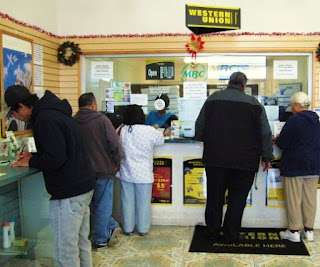
Despite regional political turmoil and the continuing global economic slowdown, demand for foreign workers remains high in the Gulf region, according to a study sponsored by Western Union (NYSE:WU), a leader in money transfer and global payment services. "Despite the political uprisings and civil unrest in some parts of the Middle East and North Africa, the region is still witnessing moderate growth, and in the Gulf countries there is an even stronger imperative to sustain economic growth and meet social needs. We expect opportunities for international workers to remain strong and with that remittance flows from host to home countries," said Jean-Claude Farah, Western Union's Senior Vice President for the Middle East and Africa. "The Asia Pacific region has been a significant source of labour for Gulf countries -- led by India, Philippines, Bangladesh, Indonesia, Sri Lanka, Malaysia, Thailand and Nepal.  This study should instill greater confidence for global worke...