Posts

Asia-Pacific growth slows down in 2012

Image
 Growth in the East Asia and Pacific region slowed to an estimated 7.5 percent in 2012, from 8.3 percent in 2011, largely due to weak external demand and policy actions in China to contain inflation. Growth in the region, excluding China, slowed less quickly due to robust domestic demand. Economic activity throughout the region accelerated toward the end of the year as global financial markets stabilized and policies in China became more accommodative. Regional GDP growth is projected to pick up to 7.9 percent in 2013 before stabilizing at around 7.5 percent by 2015, with China’s economy expanding at 8.4 percent in 2013, before easing to 7.9 percent by 2015. Ex-China, regional growth is forecast to average 5.9 percent over 2013-2015 on strong domestic demand and intensified global trade flows. GDP growth in Europe and Central Asia is estimated to have slowed sharply to 3 percent in 2012 from 5.5 percent in 2011 as the region faced significant headwinds, including weak external dem...


Norway tops per capita income; China's GDP at 8.6%

Image
The Economist Intelligence Unit released in its latest survey of the world's GDP growth forecast for 2013 vis-a-vis the countries' per capita income. In the Asia-Pacific Countries, China is the leader of the pack with a growth forecast of 8.6% for 2013. Due to its large population, however,  its per capita income remains at $6,890. Sri Lanka (formerly Ceylon) comes second with 6.8%, with a per capita of $3,150. Others include Uzbekistan--6.7% ($1,920) ; India--6.5%($1,770); Afghanistan--6.5%($668); Indonesia--6.3% ($,3,890); Bangladesh--6.1% ($695); Philippines--6.0% ($2,650); Vietnam--6.0%  ($1,800); Kazakstan--5.1% ($12,210); Thailand--4.7%  ($5,800); Malaysia--4.6% ($11,580); Singapore--4.0% ($53,370); Hong Kong--2.4% ($35,610); Japan--1.2%  ($45,680); South Korea--3.7% ($24,590); Taiwan--3.6% ($22,020); Pakistan--3.3% ($1,410); New Zealand--2.3%  ($33,160); and Australia--3.0% with a per capita pegged at $66,950, the highest in the region so far. ...

US-based Chinese scientist files suit vs Nobel Assembly for unfair competition

Image
LOS ANGELES, Dec. 7, 2012 --Dr. Rongxiang Xu, the founder of "human body regenerative restoration science" and a renowned life scientist and medical scientist, has filed a lawsuit today against The Nobel Assembly at Karolinska Institutet, a Swedish corporation, aka, Nobelforsamlingen. The Nobel Assembly at Karolinska Institutet is a body which awards the Nobel Prize in Physiology or Medicine. The suit filed in Superior Court of the State of California, Orange County Central Justice Center cites Libel and unfair competition. Dr. Xu, one of the leading scientists in the world, discovered in 1984 the existence of "regenerative cell" which was confirmed to be keratin-19 positive stem cell after 2000 (US patent 6991813B2), during his study of burn treatments that has benefited 20 million burn victims in 73 countries, claims his good reputation in the community was defamed by a statement published by defendants, The Nobel Assembly, causing damages to Dr. Xu by their...

Risk of gout attacks

Image
Too much uric acid in the body makes one vulnerable to experience the risk of gout. Gout is a sickness that occurs with the build up of purines, which are naturally made by the human body. The rest comes from the purines in your diet. According to medical experts, "if your body produces too much uric acid and your kidneys have difficulty getting rid of it, the uric acid builds up. And this can lead to more gout attacks." Studies said that to reduce gout attacks, it's important to lower your uric acid to healthy level of less than 6 mg/dL. A pharmaceutical firm that produces medicines for gout sufferers explains that changing your diet may not be enough. Among the food and drinks that are associated with the risk of gout include: beef, pork, lamb, non-diet soft drinks, beer, liquor, certain shellfish like shrimp, lobster and scallops, certain seafoods like canned tuna, and dark meat fish. Experts advised gout sufferers to limit alcohol intake and certain foods th...

Quality of life improved by cosmetic products

Image
For the first time at a global level, it is now possible to really know how cosmetic products could improve life ! A new measuring tool, BeautyQol, has been specifically developed to scientifically establish that cosmetic products and good physical appearance can improve Quality of Life. The new study published today in the Archives of Dermatology (JAMA Network - USA) confirms that cosmetic products and good physical appearance significantly improve Quality of Life (QOL). In order to be able to investigate this topic, the authors have developed a new international QOL measuring instrument called "BeautyQol". This instrument has been tested on 3231 subjects confirming the validity and reliability of the measure in 13 countries in the world representing 16 languages: France, UK, Germany, Spain, Italy, Sweden, Russia, USA, Brazil, Japan, India (Hindi and Indian English) China and South Africa (Zulu, Sotho and South-African English). The instrument provides one overall QOL ...

China means cheap

Image
The issue on the impending fiscal cliff that America may experience this year doesn't bode well with domestic consumers. Try to get inside any Wal-Mart or K-Mart shopping stores and you will witness how the diverse consumers are being taken for a joy ride. This despite calls by some cause-oriented sectors to boycott Chinese-made products that form majority of the display at these shopping stores across America. But why do American consumers flock to these giant stores to buy cheap goods from China? Has it ever occurred to them that the more they buy Chinese products being sold at these big shopping stores, the more China's economy become much stronger and stable? In short, the more trade imbalance between the two countries will be experienced. The answer is simple. Chinese products are much cheaper to buy, even though their quality and durability are questionable. To the millions of consumers, it doens't matter anymore. In these trying times, when the value of the dol...

Toxic waste dumping

Image
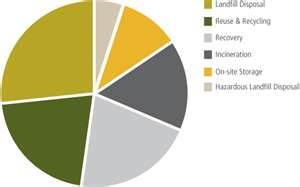
The sensitive issue of toxic waste-dumping had again taken center stage when MT Glenn Defense Marine Philippines, Inc., a Singapore-based sub-contractor responsible for the collection of toilet and kitchen wastes of the United States Navy ships, was criticized for allegedly violating the environmental marine laws of the Philippines. When the name of the United States Navy came into the picture, the immediate reaction of Philippine environmentalists and critics was that the ships that were used to dump those hazardouz wastes had ignored the provisions set forth in the VFA. As to how this mess had gotten out of hand, the public is yet to find out exactly. But based on the news reports that circulated in the print, broadcast and online media, it appeared that what the sub-contractor did was not in accordance with established environmental laws of the Philippines after the ships belonging to Glenn Defense Marine Philippines purportedly dumped the said toxic wastes into the waters off t...